
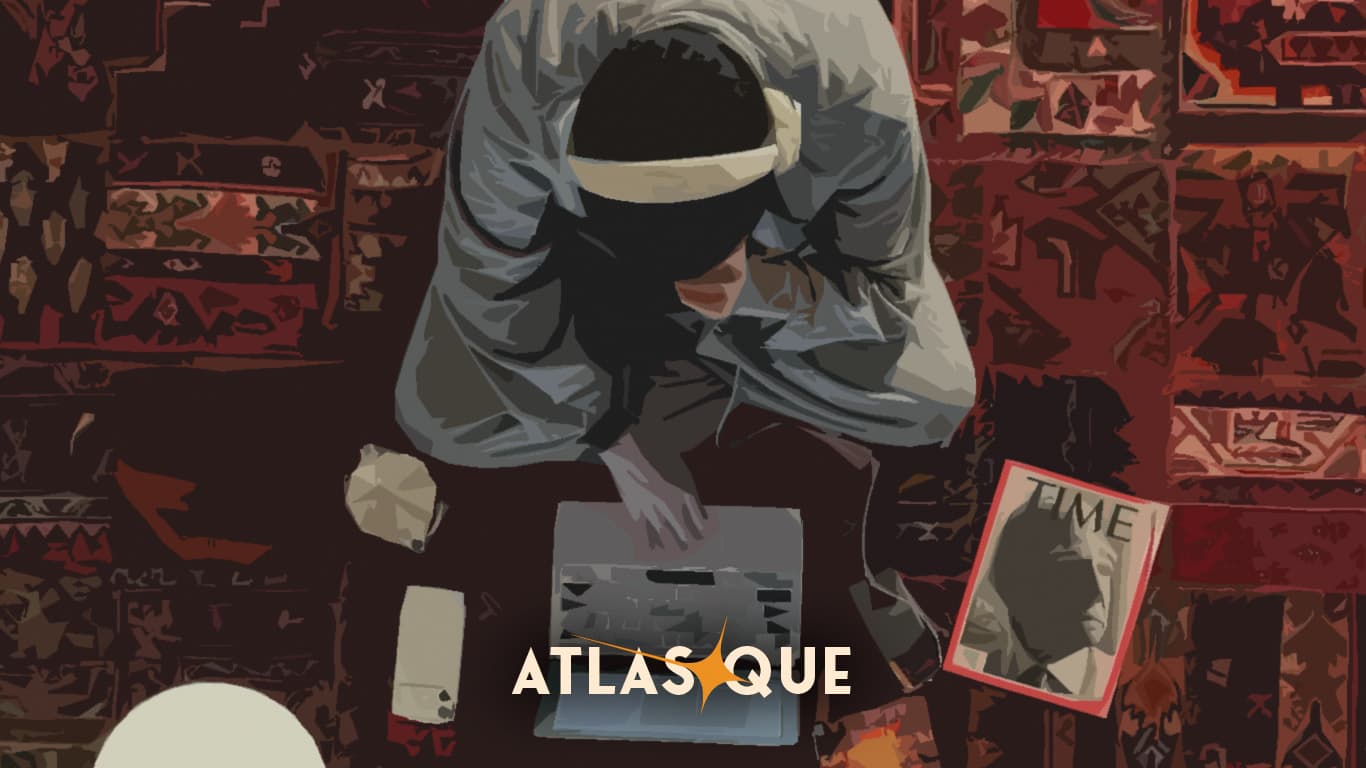
I wanted to flip the table.
I wasn’t surprised, but I have heard this response more times than I can remember. At job loss, heartbreak, grief, chronic pain, failing grades, and the list goes on. Ma3lish. Two syllables which somehow cover everything and practically solve nothing.
It’s a testament to the fact that we, Algerians, have an extraordinary relationship with dismissal. We folded it, wrapped it, tied the ribbon, and handed it over with a smile like it would fix something.
To give credit where credit is due, the expression, in its purest form, carries a lot of beautiful meanings. “Let go, don’t carry this, you’re bigger than this moment.” In the right context, when it’s said after being truly heard, it lands like a relief.
But it’s rarely about how we use it in our day-to-day interactions.
In fact, it’s usually used after you’ve finished the sentence. Like a door being quietly closed in your face. A social full-stop. Basically, “I see you’re going through something. Could you not? ”
Psychologists have a clinical term for this. Emotional invalidation. This is the act of rejecting, dismissing, or minimizing someone’s experience. That leads to higher anxiety, depression, and distress. The data, as they say, is not cute.
A Taxonomy of Our Favorite Coping Tool
The worst part is that not all the Ma3lish/s are equal in nature. Based on my humble experience in life, I identified three types:
The Competitive: Packaged as “Ma3lish, other people have it worse,” an absolute classic. Referred to in psychology as comparative suffering. Delivered with great confidence and completely misses the whole point. I find this one, in fact, the most harmful, because someone’s pain isn’t a tournament for “who’s suffering the most.” Someone’s suffering also does not cancel out the other’s. Using this phrase is an emotional nuke; clinically speaking, it is one of the most minimizing things someone can do.
The Deflecting: The usual “Yeah, ma3lish,” followed by a shrug. This one belongs to the person who’s really uncomfortable with your discomfort. The thing is, they don’t use it maliciously; they’re just protecting themselves. Your emotions might be contagious to them, and they don’t know what to do with them, so they extinguish them quickly. Ma3lish, in this case, becomes their fire blanket.
The Loving: The purest, and the one we defended earlier, it often comes like “Ma3lish, don’t worry yourself too much.” This is often used by your mother, best friend, and the person who actually cares about you. They just want your suffering to stop, so they tell you it shouldn’t exist. Their intentions are benevolent, but the effect remains the same. Sadly, you learn that your feelings are an inconvenience, even to people who love you.
A Culture of Surviving, Not Feeling
Algerians have had a lot to endure. A brutal colonial history. A decade of violence that still haunts us. When survival is at the forefront of our emotions, stoicism turns from a preference to culture’s modus operandi.
I mentioned this in my article about rejdla. Coping mechanisms designed for moments of crisis become detrimental to our health when used as a daily communication tool. What kept people standing through calamity now runs quietly in the background of every conversation. Flattening every emotional experience into one acceptable frame: “It is what it is.”
Sociological research on Arab and North African cultures consistently points to strong values. Endurance, family honor, and public composure create societal norms where showing vulnerability equals weakness. The way to do it is that you don’t talk about your feelings; you manage them. You ma3lish your way through.
So, when exactly did resilience become an excuse to euthanize our emotional system?
Fine Is Not a Feeling
One thing I learned through my twenty-seven years on this planet is that suppressing your emotions doesn’t make them magically disappear. People who constantly push away their negative emotions as a coping strategy end up with worse mental health. The depression rates, which are on the rise yearly, are living proof. What’s buried doesn’t die. It just festers.
Growing up in environments where our feelings were routinely dismissed is linked to shame, insecurity, and a long-term struggle. A struggle in deciphering what we actually feel, let alone expressing it. It produced generations of people who are capable on the surface, and quietly struggling underneath.
When a child says they are stressed? Ma3lish dirha. When a teenager is anxious? Ma3lish 3adi. An adult burned out? Ma3lish, hadi hiya lhyat.
An ouroboros keeps eating its own tail.
A Different Script
We are not bad at caring; we are bad at sitting still while someone else hurts.
We use ma3lish to fill the silence when we don’t know what to do. We never learned how to do so because nobody ever sat with us long enough, either. The dismissal was passed down like everything else, quietly, lovingly, without a single bad intention.
The saddest part is that we did not build a culture out of cruelty. We built a culture of discomfort with pain, our own included. Along the way, we mistook the inability to feel for the strength to endure.
Real resilience was never about silence. It was always about the person who stayed in the room after you said “I am not okay,” and didn’t hand you a ma3lish.
We can be that person; we just have to decide it’s worth the awkwardness.