
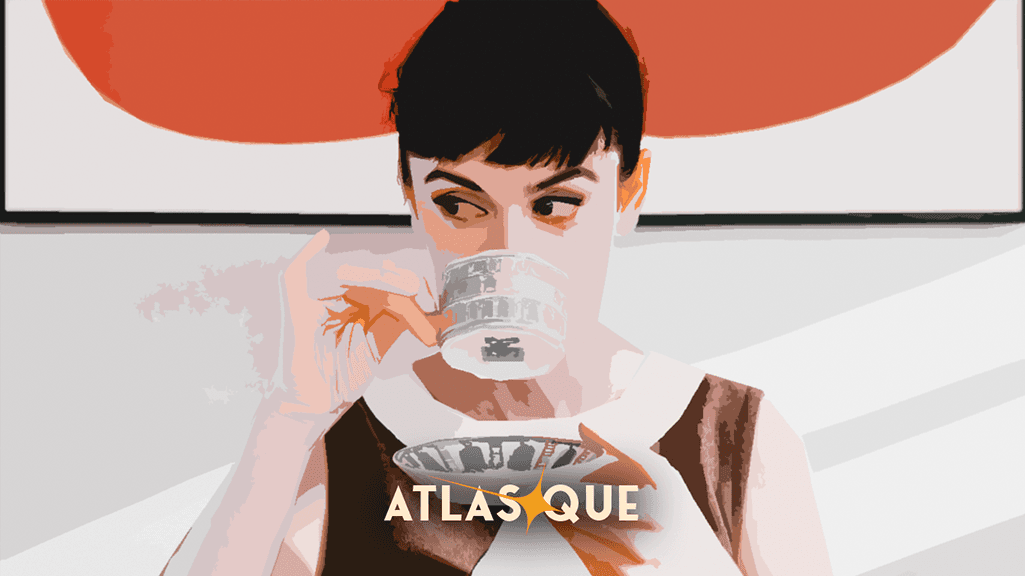
Lewis Carroll once sat a Mad Hatter at a table permanently frozen at six o’clock and called it a tea party. The Hatter isn’t mad the way a doctor would diagnose. He’s mad in a more exciting sense. He’s simply checked out of the whole arrangement. Time, sequence, the unspoken agreement that one thing should reasonably lead to another. He’s not confused by those rules. He’s just done with them.
And yet, at that completely ridiculous table, something clicks. A different kind of logic takes over. A deeper one, almost.
We don’t give playfulness enough credit in fiction. We treat it like the decorative edge of serious work, like the garnish, when in reality, it’s the meal.
Whimsy gets tolerated; gravity gets respected. But that gets it exactly backwards. Some of the most penetrating literature ever written came dressed as a joke. And it was always, quietly, laughing at the people who took it that way. On anyone who laughed and left.
Nonsense, the shadow twin of sense, loves rules.
Carroll’s poems follow the rules of language perfectly, the grammar is right, the rhythm is tight. They just refuse, politely and systematically, to mean anything conventional. And the result is stranger than outright chaos. When a Jabberwock gets slain with a vorpal blade, you feel like you understand completely and not at all, simultaneously.
That feeling, of logic running at full speed toward a door that isn’t there, is actually closer to real life than most realistic prose ever manages to get.
That’s the first thing playful fiction gives us. Honesty.
Honesty about the gap between our desperate need to make sense and a world that never did.
Kafka understood this better than almost anyone, and pushed it somewhere much darker.
The horror of The Trial isn’t that Josef K. is arrested for something terrible. It’s that he’s arrested for something he can’t name, tried by a court he can’t find, under laws he’s never allowed to read. Which is, if you sit with it, extremely funny. Bureaucracy taken to its logical conclusion always is. And also, it’s the most accurate description you’ll ever encounter of what it actually feels like to be a person inside a system that doesn’t explain itself.
The playfulness is what gets it through the door. Because a direct accusation of institutional cruelty can be argued with, picked apart, dismissed. An absurdist one gets under your skin before you’ve had a chance to defend yourself. You can’t quite refute a joke. Go ahead, try.
Carroll discovered this with nonsense verse; Kafka discovered it with dread. Both found that bending reality was the fastest route to its center.
Italo Calvino spent an entire career connecting those two impulses, the playful and the precise; To see how far he could stretch the wire between them. Invisible Cities is Marco Polo describing cities that cannot possibly exist to a Kublai Khan who might himself be a figment, and it is somehow one of the most serious meditations on memory and longing you’ll ever read. The playfulness should be seen as the structure and not the pretty decoration. Proof? Pull it out and the whole thing collapses into a lecture nobody asked for.
What Calvino understood, along with Carroll and Kafka, each in their own register, is that the imagination needs permission. Realistic fiction works under a quiet social contract; that is, the world you’re describing has to behave like the world the reader already lives in.
That keeps fiction grounded, yes.
But it also keeps it small.
Playfulness tears up the contract. And in the pieces, you find that some truths can only be approached sideways. Nonsense gets there first. Dread follows close behind.
And if you’re Calvino, you turn the whole chase into a game and invite the reader to play along.
There’s a kind of seriousness that only play can reach. The philosopher Gadamer had this idea that play isn’t what we do when we’re free from the world, it’s a mode of being fully absorbed by something outside yourself. To really play is to be taken over by it. And that’s exactly what Carroll, Kafka, and Calvino each do, in wildly different keys. They don’t let you stand back and appreciate the cleverness from a safe distance. They pull you inside their logic until it starts to feel normal. And then, when you surface, ordinary reality looks a little different than it did before.
Carroll’s Hatter is still at his table. The tea is still hot. Kafka’s court is still in session, somewhere in a building you’ll never find. And Calvino is still out there, building cities from longing and describing them to a king who may or may not be listening. Why is a raven like a writing desk? still has no answer. But it remains, after all this time, the best question in the room. One that sounds like a riddle, opens like a door, and leads somewhere that no map has ever quite reached. Yet.
Nonsense, it turns out, was serious the whole time.
And will continue to be.
How do you like your tea?